Provocative Tests in Diagnosis of Thoracic Outlet Syndrome: A Narrative Review
Fahmi H. Kakamad, Berun A. Abdalla, Saywan K. Asaad, Hawkar A. Nasralla, Abdullah K. Ghafour,...
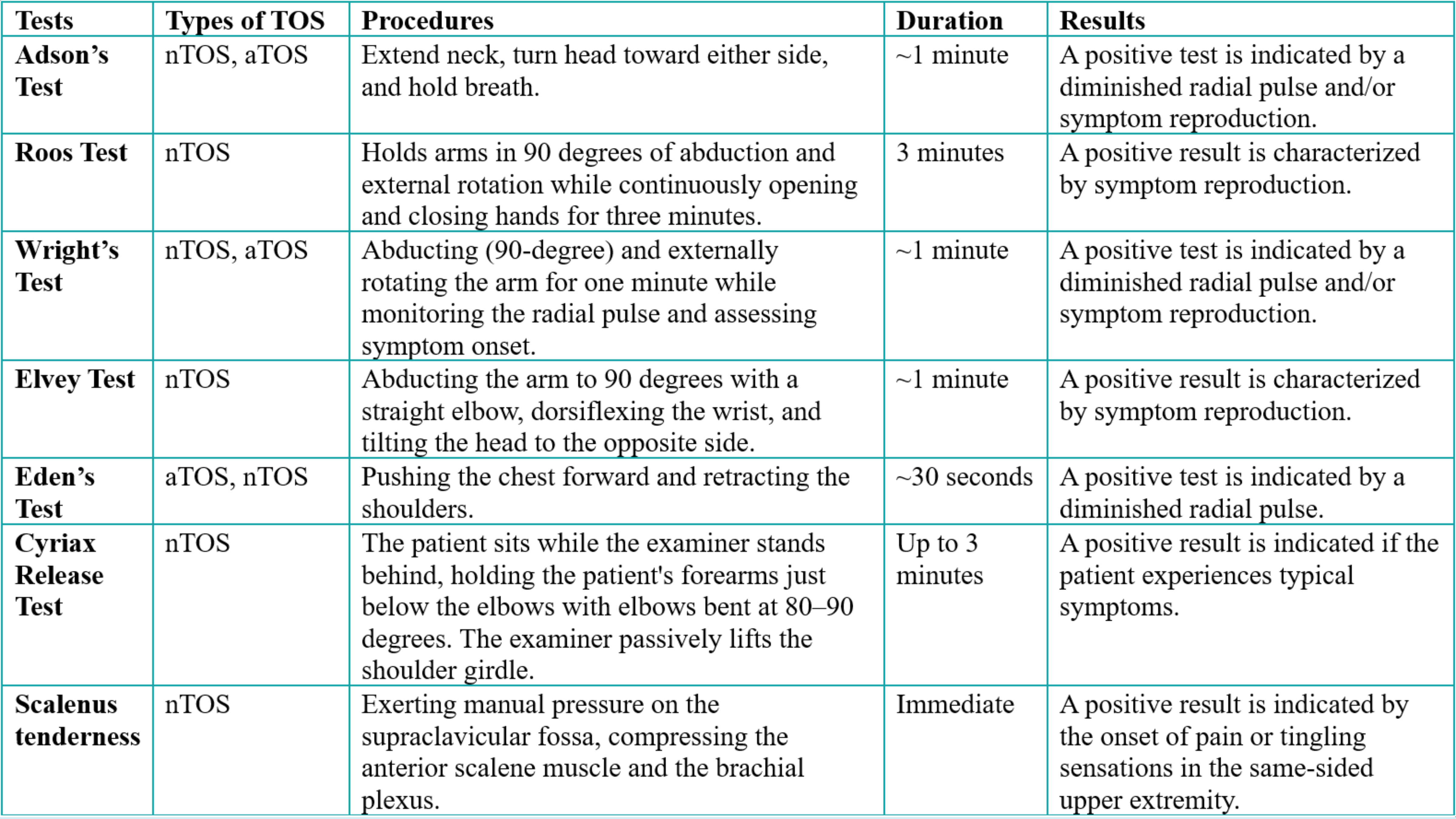
Thoracic outlet syndrome (TOS) is a group of conditions caused by the compression of the neurovascular bundle within the thoracic outlet. It is classified into three main types based on the affected structure: neurogenic, arterial, and venous TOS. Diagnosis remains challenging due to symptom overlap with other conditions and a lack of universally accepted criteria. Provocative tests are integral to clinical evaluation, aiming to reproduce symptoms by stressing anatomical structures prone to compression. This review evaluates the commonly used provocative tests for TOS, analyzing their diagnostic performance, limitations, and clinical utility. Individual provocative tests vary widely in diagnostic performance. The Roos test demonstrates high sensitivity but poor specificity, while tests like the Cyriax Release and Wright’s hyperabduction offer better specificity at the cost of sensitivity. Most tests show significant overlap in symptom reproduction with other upper limb or cervical pathologies, contributing to high false-positive rates. Combining multiple tests improves diagnostic accuracy but still falls short of a definitive standard. While provocative tests are valuable for screening and clinical assessment of TOS, their standalone diagnostic reliability is limited. A multimodal approach integrating clinical examination, imaging, and electrodiagnostic studies is essential for improving diagnostic confidence and patient outcomes. Future research should aim to standardize testing protocols and validate findings through large-scale, population-based studies.