Introduction: A collision tumor consists of two distinct neoplastic components located within the same organ, separated by stromal tissue, without histological intermixing. These rare tumors are usually identified incidentally in surgical specimens. This study systematically reviews complex collision tumors (those with three or more distinct histological types) to explore their features and clinical behavior.
Methods: A comprehensive literature search was conducted using Google Scholar, Consensus AI, and Perplexity AI to identify all articles that describe collision tumors comprising more than two distinct pathologies. Studies lacking full texts, reviews, or those from predatory journals were excluded. Data extracted included publication details, patient demographics, clinical and diagnostic findings, tumor characteristics, treatments, outcomes, and follow-up. Findings were analyzed qualitatively and summarized using frequencies, percentages, and means with standard deviations.
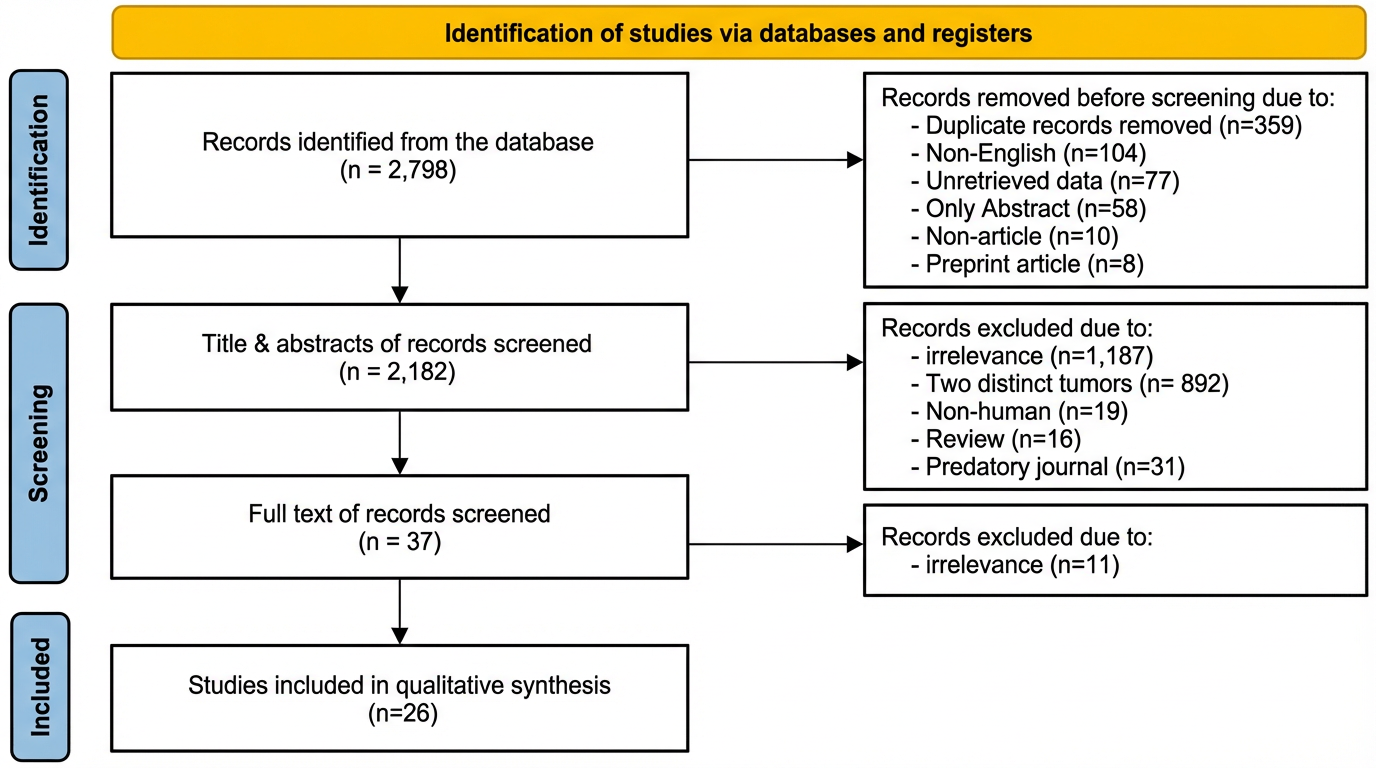
Results: A total of 2,798 articles were identified, and 26 studies (28 cases) met the inclusion criteria. Female patients accounted for 17 cases (60.72%), with a mean age of 63.46 ± 14.00 years. Surgery was performed in 26 cases (92.86%). Triple collision tumors were reported in 26 cases (92.86%), and quadruple collision tumors in 2 cases (7.14%). The thyroid gland was affected in 7 cases (25.00%), and papillary thyroid carcinoma was identified in 9 cases (32.14%). At the last follow-up, 22 patients (78.57%) were alive.
Conclusion: Complex collision tumors represent rare and histologically diverse entities with significant diagnostic and therapeutic implications. They are most frequently found in the thyroid and skin. Accurate diagnosis typically requires comprehensive histopathological and immunohistochemical analysis of the entire lesion.